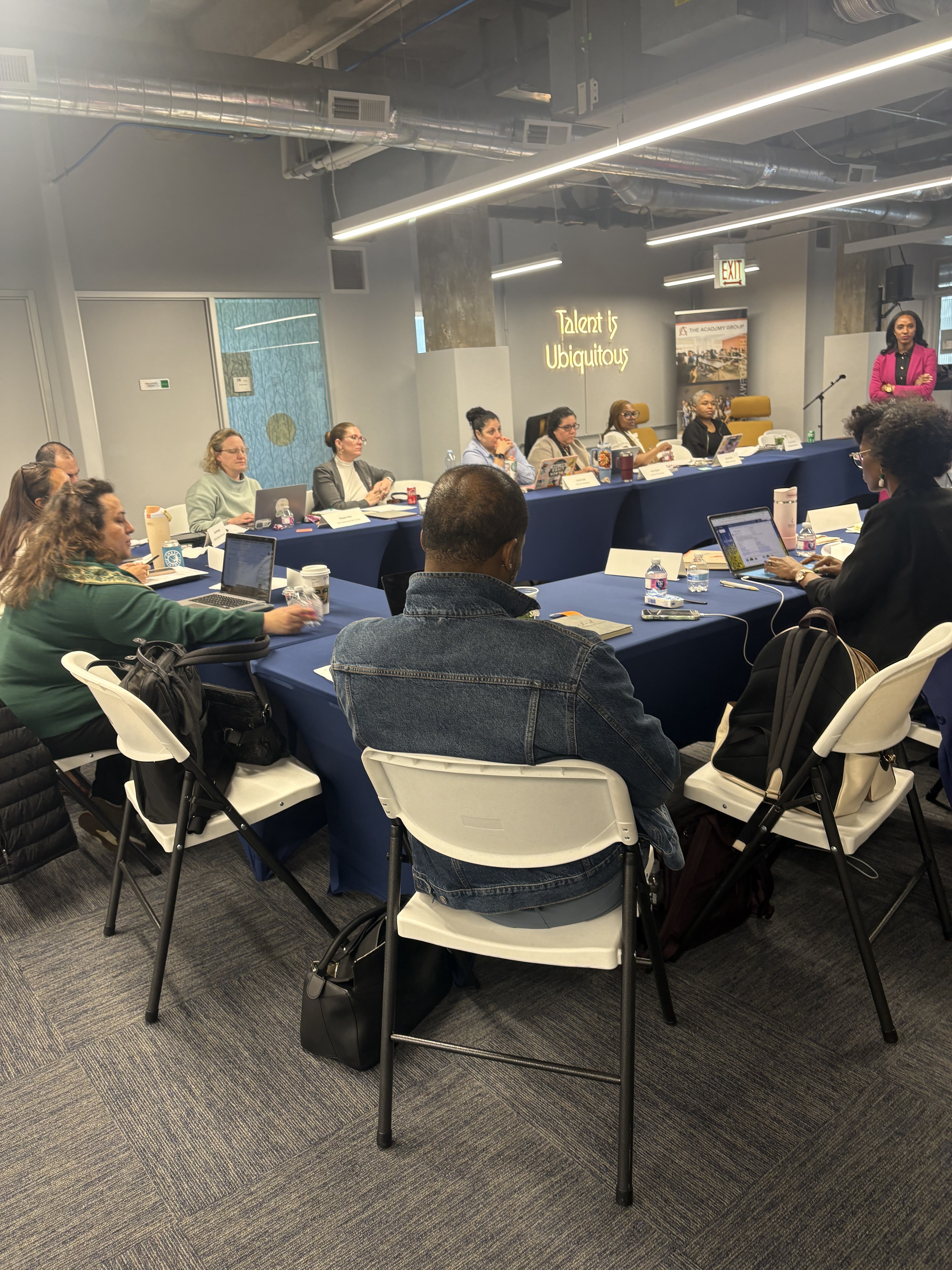
A day inside our Malott Fellowship Lab #8
By Dr. Peggie Burnett-Wise, Wise Leadership Consulting
We started Lab #8 with a game.
Not a deep reflection. Not a research framework. Not a data slide. A game. A ridiculous, low-stakes, throw-yourself-in game called Walk the Line, also known as Would You Rather, Principal Edition. Would you rather have no walkie-talkie all day, or one stuck on the all-school channel at full volume? We played Two Truths and a Whopper in mixed trios. We did a one-word forecast for how each fellow wanted to feel by 4 PM.
I will tell you why.
These principals walked in carrying everything. Daily staffing uncertainty. No 2026 to 2027 budget yet. Anticipated district staffing cuts. End-of-year exhaustion compounding all of it. By late April, the leaders we coach are not in their freshest moment. The temptation, as facilitators, is to meet that with seriousness. To match the weight in the room with the weight of our content.
We chose the opposite. We chose play first, then work. Joy first, then strategy. Connection first, then the hard conversation about scarcity.
By the time the laughter settled, the room was different. Lighter. Trusting. Ready.
Then we got to work.
What Year One built

Lab #8 is the second to last lab of Cohort 2’s first fellowship year. We have spent this year inside what we call the Renewal Journey:
- Lab 5: Savoring. Noticing what is working.
- Lab 6: Time Management. Reclaiming our time.
- Lab 7: Design Studio. Building our tools.
- Lab 8: Leading Through Uncertainty. Protecting what matters.
Today we asked our fellows to name what they are carrying out of this year. Their answers were specific and honest.
Savoring practices that have started to restore presence. Planning rituals that protect instructional time. First responder systems that distribute the weight of daily building demands across more than one person. Accountability partnerships that have outlasted the labs that introduced them.
This is not theory. These are the practices our fellows built, kept, refined, and are now ready to carry into Year Two.
And then we named what is also true

We put on the same slide, side by side, what these same fellows are also walking into right now:
Unpredictable daily staffing. No budget for next school year. Anticipated district staffing cuts. End-of-year exhaustion compounding all of it.
How do you protect what is working when the conditions are actively trying to take it from you?
That is the question we sat with for the rest of the morning. Not as a rhetorical flourish. As a real, practical, urgent question with real, practical, urgent answers.
The willow, not the oak
We anchored the renewal session in a line from Robert Jordan:
The oak fought the wind and was broken. The willow bent when it must, and survived.
That is what leading through uncertainty actually asks of school leaders. Not heroic resistance. Not absorbing every blow personally. Bending with intention. Knowing what to protect, what to adapt, and what to release without guilt.
We walked our fellows through a triage framework with three columns:
- Protect. What I will hold onto no matter what. Practices, structures, and commitments that are non-negotiable for my leadership, my school, and my own sustainability.
- Adapt. What I will modify to fit the conditions. Practices that matter but may need to be scaled down, combined, or done differently given the constraints.
- Release. What I will let go of without guilt. Tasks, expectations, or habits consuming resources without proportional impact, including things others expect of me.
Our fellows applied that framework to four areas of their leadership: their time, their staffing, their renewal practices, and their own wellbeing.
That last one matters most. A principal who releases their own wellbeing first protects nothing.
Beliefs made visible

After lunch we turned to a different mirror: the 5Essentials Effective Leaders measure. The session opened with one of the most important sentences we teach in this fellowship:
Your Effective Leaders data is not solely measuring your actions. It is measuring your beliefs made visible.
We asked our fellows to look honestly at their own data across the four submeasures (Teacher Influence, Program Coherence, Teacher-Principal Trust, and Instructional Leadership). We had each fellow write two anonymous Post-its. The first one started with: As a leader right now, I believe I can… The second one started with: If I am being honest, I sometimes doubt whether I can…
We walked the wall in silence. We read each other’s beliefs. We read each other’s doubts. And then we asked one question: which belief, if strengthened, would move one submeasure next year?
That is how you grow effective leaders. Not by drilling them on practices. By helping them locate the belief that is producing the data, and choosing to strengthen it.
Principals teaching principals

The afternoon closed with a Problem of Practice Protocol. One fellow brought a real, current leadership challenge tied to her PLC focus. The rest of the cohort moved through clarifying questions, probing questions, and a peer discussion in which the presenter listened silently while colleagues thought aloud about her problem.
I wish you could have heard it.
This is what co-creation actually looks like. Not a poster on the wall. Not a buzzword in a deck. Principals leading schools shaped by historic community disinvestment, turning to each other and saying: here is what I tried, here is what worked, here is what I am still wrestling with.
The presenter took notes. The room held the silence with care. And by the end of it, she had three new approaches she did not walk in with.
What I want you to take from today
We closed the lab the way we close every lab, in a circle, with a single sentence completed out loud:
Because of this work, I am a leader who __________.
I will not break the trust of that circle by sharing what each fellow said. But I will tell you this: the room ended quieter than it started, and stronger.
If you are a school district building a principal pipeline, a foundation funding leader development, a university partner shaping new principals, or a sitting principal looking for the kind of support that actually changes how you lead, this is what serious investment in school leaders looks like. It looks like a coaching team that has been with you all year. Monthly labs that build on each other instead of jumping topics. One-on-one coaching every week. Frameworks rooted in research and adapted for your reality. And, when you walk in carrying everything, the wisdom to start with a game.
You are not sustained by the system. You are sustained by each other, by the practices you protect, and by the choice to lead with intention even when the conditions don’t make it easy.
That is what we built in Lab #8. That is what we have been building all year. And we are not done.
Subscribe to the Wise Leadership Consulting blog to follow the rest of our fellows’ Year Two journey, hear from the principals themselves, and see how serious, sustained coaching changes what is possible for schools.
Want to talk about leader development for your district, foundation, or university partnership?

Leave a Reply